 The Lab project that our group did was composed of the chemicals Barium, Calcium, Strontium, Sodium gave out diferent colors when they were burned by the Bunsen Burner. The color change that was visibal, showed that the chemical reaction was happening. The fact that each chemical or subsatance gave out different types of reactions gave us the proof that a chemical reaction was taking place. The color change was not only the reaction that we were able to see. The other reaction that took place was the magnisium strip and the Acid that was provided for the experiement. As seen in the photo by adding the magnisuim strip to the fire with the substances Balrium, Sodium, Calcuim, and Strontium.
The picture that is seen at the right is when the Barium was added to the fire
and reacted. As visible in the photo, the Barium that was in the strip was able to react thus giving the flame color that is seen here. The color that was given was green in this case.

Calcium and Sodium burned the color orange while Srontium burned the color red. The chemical reactions that were made cannnot be seen very clearly, but the fact that the chemical reactions were visible with the eye we were able to confirm the color of the chemical reactions that happened.
Equipment Used:
1. Pincers were used to hold the magnisium strip.
2. Petri dishes were used to hold the substances above.
3. Bunsen burner was used to burn the substances
Substances Used
1. Barium
2. Sodium
3. Calcium
4. Strontium
Barium
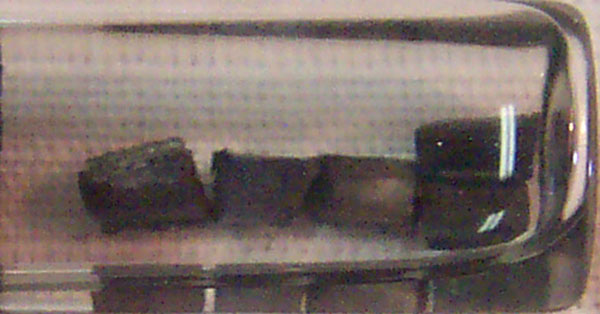
Barium is a soft silvery metallic alkaline
earth metal. It is never found in nature in
its pure form since this metal oxidizes very easily when exposed to air, and is highly reactive with water or alcohol, producing hydrogen gas. Barium compounds, and especially barite (BaSO4), are extremely important to the petroleum industry. Barite is used in drilling mud, a weighting agent in drilling new oil wells.
Sodium

Sodium is a soft, silvery white, highly reactive element and is a member of the alkali metals. Sodium quickly oxidizes in air and is violently reactive with water, so it must be stored in an inert medium, such as kerosene or mineral oil. Sodium is present in great quantities in the earth's oceans as sodium chloride (common salt). It is also a component of many minerals, and it is an essential element for animal life.
Calcium
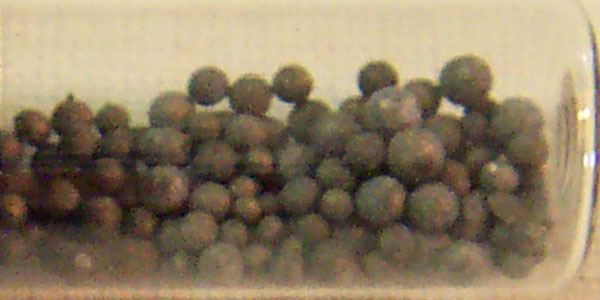
Calcium is a soft grey alkaline earth
metal, and is the fifth most abundant
element by mass in the Earth's crust. Calcium is also the fifth most abundant dissolved ion in seawater by both molarity and mass, after sodium, chloride, magnesium, and sulfate. Chemically calcium is reactive and soft for a metal (though harder than lead, it can be cut with a knife with difficulty). It is a silvery metallic element that must be extracted by electrolysis from a fused salt like calcium chloride.
Strontium

Strontium is a soft silver-white or
yellowish metallic element that is
highly reactive chemically. The metal turns yellow when exposed to air. Due to its extreme reactivity with oxygen and water, this element occurs naturally only in compounds with other elements, as in the minerals strontianite and celestite. Strontium is a grey/silvery metal that is softer than calcium and even more reactive in water, with which strontium reacts on contact to produce strontium hydroxide and hydrogen gas.

No comments:
Post a Comment